How to Prevent Cross Contamination in the Operating Room?

Time:2026-10-16 Author:Isabella
0%

How to prevent cross-contamination in the operating room begins with disciplined, repeatable practice. Every sterile field depends on small decisions made before, during, and after surgery. Clean hands, correctly fitted gloves, protected instruments, and controlled movement create the first barrier against contamination. A single touch on a light handle can compromise that barrier. Details matter.

Operating room teams should follow current infection prevention guidance from recognized health authorities and their facility’s validated protocols. Staff need practical training, not only written policies. They should check surgical attire, hand hygiene, sterilization indicators, packaging integrity, and room traffic before incision. Doors should remain closed when possible. Unnecessary equipment and personnel increase movement, noise, and contamination opportunities. Between procedures, environmental services should clean high-touch surfaces, anesthesia equipment, and operating tables according to approved procedures and contact times. The details must be visible.

Experience also shows that compliance can weaken during emergencies, staff shortages, or rushed turnovers. That reality deserves attention, not blame. Even experienced professionals can miss a contaminated glove or overlook a damaged sterile wrapper. Teams should use brief safety pauses, speak up respectfully, and document near misses for improvement. A checklist helps. It cannot replace judgment.

This guide explains practical methods for reducing microbial transfer in the operating room. It connects evidence-based recommendations with the physical realities of surgical care, including instrument handling, patient preparation, waste control, and postoperative cleaning. Practices may vary by procedure and local policy, so clinical leaders should review them regularly. No system is perfect. Safer care comes from consistent habits, honest reflection, and a shared commitment to protecting every patient.
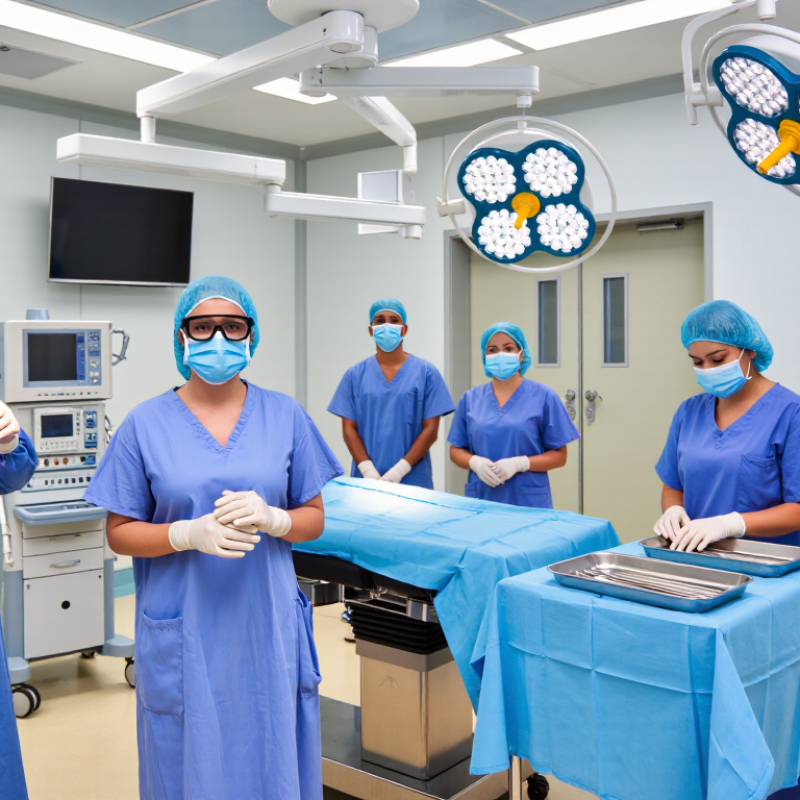
How to Prevent Cross Contamination in the Operating Room?

Understanding the Sources and Routes of Cross-Contamination

How to Prevent Cross Contamination in the Operating Room

Understanding the Sources and Routes of Cross-Contamination

Cross-contamination starts before the incision. Microorganisms may enter through staff hands, clothing, instruments, surfaces, air, or patient skin. Door handles and mobile equipment can also carry organisms between clean and contaminated zones. Air moves. So does traffic.

Hands remain a common route, especially when gloves create false confidence. Staff should perform hand hygiene at the required moments and replace gloves after contamination. Sterile instruments need protected transfer and careful handling. A wet sterile drape is not reliably protective. Fluids can pass through it. Surgical teams should separate clean supplies from used items and keep waste containers away from sterile preparation areas.

Room movement matters more than many teams expect. Frequent door opening can disturb airflow and increase unnecessary traffic. Clear zoning, limited personnel, and closed doors reduce this route. Environmental cleaning must follow a documented sequence, using friction and the correct contact time. High-touch surfaces need attention, not only visible dirt. Small lapses matter.

Reliable prevention depends on current clinical guidance, staff competency checks, and routine surveillance. Teams can review contamination events without blame and identify weak points in their workflow. Yet no process is flawless. A rushed turnover, misplaced instrument, or missed hand-hygiene moment can defeat several controls. Regular observation and honest feedback keep prevention practical rather than merely procedural.

Preparing the Operating Room Before the Procedure

How to Prevent Cross Contamination in the Operating Room?

Preparing the Operating Room Before the Procedure

Preparation begins before the patient enters. The team should confirm room traffic, equipment needs, and cleaning responsibilities during the briefing. Remove unnecessary items from open surfaces. Fewer objects mean fewer places for contamination to hide.

Environmental cleaning must follow a written sequence, from cleaner areas toward dirtier ones. Pay attention to bed rails, light handles, anesthesia workstations, door handles, and cables. These small contact points are easy to miss. The Centers for Disease Control and Prevention recommends cleaning and disinfecting high-touch surfaces between procedures. Its data also indicate that about one in 31 hospitalized patients has a healthcare-associated infection on any given day.

Use sterile supplies only after checking package integrity, expiration dates, and moisture damage. Store them away from sinks and floor-level splash zones. Keep doors closed when possible. Limit unnecessary movement. It sounds simple.

The World Health Organization reports that surgical site infections affect approximately 11% of surgical patients in low- and middle-income settings. That figure makes preparation more than housekeeping. It is risk control. A trained team should verify ventilation status, hand hygiene facilities, waste containers, and instrument transport routes before incision. Still, no checklist is perfect. Teams may sign every box while overlooking a contaminated monitor button. A short pause at the bedside can expose that weakness.

How to Prevent Cross-Contamination in the Operating Room?

The chart shows a recommended preparation sequence before the procedure, based on infection-prevention principles from the World Health Organization and the U.S. Centers for Disease Control and Prevention. Environmental cleaning and disinfection should be completed before sterile supplies are opened, disinfectants should remain visibly wet for the required contact time, and unnecessary traffic should be minimized.

Applying Sterile Practices During Surgery

Sterile practice begins before the patient enters the operating room. The team should perform surgical hand antisepsis, allow hands and forearms to dry, and inspect every gown, glove, and drape.

Wet fabric can transfer microorganisms through capillary action. Gloves are barriers, not substitutes for hand hygiene. The CDC recommends changing gloves after contamination and cleaning hands immediately afterward.

Environmental control requires discipline. Keep doors closed, limit unnecessary movement, and separate sterile supplies from contaminated instruments.

AORN perioperative guidance emphasizes controlled traffic and documented cleaning between procedures.

This matters because the World Health Organization reports surgical site infections affect about 11.8% of patients after surgery in low- and middle-income countries.

The figure is not merely statistical; it represents longer recovery, additional treatment, and preventable distress.

During surgery, a torn glove, dropped instrument, or uncertain package should be treated as contamination. Replace it without hesitation. Speak clearly. Record the event.

In practice, teams sometimes become overconfident after repeated successful procedures. That is a weakness worth admitting.

A sterile field can look untouched while hidden contact has already occurred. At closing, count instruments and sharps, remove contaminated materials carefully, and disinfect high-touch surfaces.

CDC guidance also supports cleaning visibly soiled areas before applying disinfectants.

Small lapses matter. Consistency protects patients.

Managing Instruments, Supplies, and Waste Safely

Cross-contamination often begins with a small handling error. Instruments should move in one direction, from the sterile field toward decontamination. Clean and used items need separate, clearly marked surfaces. A used instrument should never return to a clean tray, even briefly. That shortcut is easy to miss.

Supplies require similar discipline. Staff should inspect package seals, expiry dates, and moisture before opening. Open only the items needed for the procedure. Unused sterile supplies can become contaminated when placed near splashes, gloves, or waste. Keep backup materials outside the immediate field. During a busy case, labeling may seem unnecessary. It is not. A visible label prevents uncertainty during handoffs.

Waste handling demands calm attention. Sharps belong in rigid containers at the point of use, not on a trolley or in a linen bag. Blood-soaked materials should enter the designated regulated-waste container according to facility policy. Staff must change gloves after handling waste and before touching clean equipment. This detail is often forgotten during emergencies. No workflow is flawless. Experienced teams still miss a wrapper or move a contaminated clamp too close to sterile supplies. Brief pause checks, clear verbal communication, and incident reviews can expose these weak points. Near misses should be examined without blame, because silence allows the same mistake to return.

Monitoring Compliance and Improving Infection Control

Preventing cross-contamination in the operating room requires more than sterile supplies and written policies. It depends on monitoring daily behavior. The World Health Organization reports that surgical site infections affect about 11% of patients undergoing surgery in low- and middle-income countries. In high-income settings, the reported rate is approximately 2% to 5% (WHO Global Guidelines for the Prevention of Surgical Site Infection, 2016). These figures make compliance monitoring a patient-safety duty, not an administrative task.

Auditors should observe hand hygiene, gown and glove changes, instrument handling, room traffic, and door openings. Record results by procedure, shift, and staff role. A simple dashboard can reveal patterns, such as repeated traffic during implant preparation. The WHO Global Report on Infection Prevention and Control (2022) states that effective infection prevention programmes may reduce healthcare-associated infections by up to 70%. Feedback should be prompt, specific, and respectful. “The door opened six times” is more useful than “traffic was excessive.” A checklist alone is not proof.

Training should include short simulations beside the operating table. Ask staff to identify contaminated touchpoints, including light handles, anesthesia surfaces, and mobile equipment. Share results during safety huddles, then review them again after corrective action. CDC surgical-site guidance supports surveillance, standardized prevention practices, and feedback to clinical teams. Still, perfect compliance is unlikely. That uncomfortable fact deserves attention. If staff fear blame, they may hide failures, weakening the data and the response.

How to Prevent Cross Contamination in the Operating Room? - Monitoring Compliance and Improving Infection Control

Monitoring Dimension Key Indicator Evidence-Based Target Recommended Data Collection Method Review Frequency Priority
Hand Hygiene Hand hygiene performed at every required opportunity before and after patient or sterile-field contact 100% of observed required opportunities Direct observation using the WHO “Five Moments for Hand Hygiene” framework; report numerator and denominator Weekly review; monthly trend analysis High
Surgical Hand Preparation Correct use of an approved surgical hand antisepsis method before sterile gowning and gloving 100% of observed procedures Checklist audit covering product use, contact time, drying, and technique Monthly and after every identified breach High
Sterile Gowning and Gloving Closed or open gloving performed correctly; sterile gown and gloves remain intact and uncontaminated ≥95% compliance; 100% correction of observed breaches Observed competency audit and incident documentation for glove tears or contamination Monthly; competency validation at least annually High
Surgical Attire Appropriate attire, hair covering, mask, and dedicated operating-room clothing used according to facility policy 100% compliance before entering the restricted area Entry-point observation and random spot checks during operating hours Daily spot checks; monthly summary Medium
Traffic and Door Movement Unnecessary door openings and staff movement minimized during the procedure Progressive reduction; investigate repeated or avoidable openings Manual count or electronic door counter normalized per procedure duration Per procedure with monthly trend reporting High
Sterile Field Protection Items entering the sterile field are sterile, package integrity is verified, and exposure is minimized 100% of inspected items meet sterility and integrity requirements Pre-procedure checklist, package inspection, and contamination event log Every procedure High
Environmental Cleaning High-touch surfaces and the operating-room environment cleaned and disinfected between procedures 100% completion of required between-case cleaning tasks Signed cleaning checklist plus fluorescent-marker or ATP verification when used by the facility Every procedure; weekly quality review High
Instrument Reprocessing Cleaning, inspection, packaging, sterilization, and storage completed according to validated instructions 100% traceability and no release of failed sterilization loads Sterilizer records, chemical indicators, biological monitoring where required, and traceability audit Every load; monthly compliance audit High
Antimicrobial Prophylaxis Indicated prophylactic antibiotic administered within the recommended pre-incision time window ≥95% of eligible procedures; dose redosing when clinically indicated Electronic medical-record review using procedure, administration time, and incision time Monthly surgical quality review High
Hair Removal Practice Hair is not removed unless necessary; clipping is used instead of shaving when removal is required 100% compliance with approved hair-removal policy Preoperative record review and direct observation of preparation practice Monthly; immediate review after any deviation Medium
Skin Antisepsis Correct antiseptic product, application technique, drying time, and patient-safety precautions followed 100% compliance with the approved preparation protocol Direct observation and chart audit for product, allergies, application, and drying Monthly and during staff competency checks High
Personal Protective Equipment Gloves, gowns, masks, eye protection, and other PPE selected according to exposure risk ≥95% correct selection and use Observed practice audit using procedure-specific PPE criteria Monthly; after exposure incidents High
Waste and Linen Handling Contaminated waste and used linen contained, transported, and removed without contaminating clean areas 100% compliance with segregation and transport procedures Environmental rounds, transport-pathway observation, and incident reports Weekly environmental rounds Medium
Staff Training and Competency Operating-room personnel complete infection-prevention education and demonstrate required competencies 100% completion before independent practice and annually thereafter Training registry, return-demonstration records, and remediation tracking Monthly compliance report; annual validation High
Surgical Site Infection Surveillance Postoperative infections identified, classified, reported, and reviewed for preventable process failures 100% of eligible cases included in surveillance; corrective actions tracked to closure Risk-adjusted surveillance, case review, and multidisciplinary root-cause analysis Monthly; immediate escalation for clusters High
Reference framework: WHO Guidelines on Hand Hygiene in Health Care; WHO Global Guidelines for the Prevention of Surgical Site Infection; CDC Guideline for the Prevention of Surgical Site Infection; CDC Guideline for Disinfection and Sterilization in Healthcare Facilities. Local policies should define the final thresholds, audit sample size, escalation rules, and corrective-action timelines.

FAQS

When should operating room preparation begin?

Preparation begins before the patient enters. Confirm room traffic, equipment needs, cleaning duties, and transport routes.

Which surfaces require special attention?

Clean bed rails, light handles, door handles, anesthesia surfaces, cables, and mobile equipment. Small gaps matter.

How should environmental cleaning be organized?

Follow a written sequence from cleaner areas toward dirtier areas. Disinfect high-touch surfaces between procedures.

What should staff check before using sterile supplies?

Inspect package seals, expiration dates, and moisture damage. Store supplies away from sinks and floor-level splash zones.

How can unnecessary contamination be reduced during a procedure?

Keep doors closed when possible. Limit movement and remove unnecessary objects from open surfaces.

How should compliance with infection-control practices be monitored?

Observe hand hygiene, glove changes, instrument handling, room traffic, and door openings. Record findings by procedure, shift, and staff role.

What makes audit feedback useful?

Feedback should be prompt, specific, and respectful. “The door opened six times” is clearer than “traffic was excessive.”

Can a checklist prevent every contamination problem?

No. A team may complete every box yet miss a contaminated monitor button. A bedside pause can reveal overlooked risks.

What training methods can improve daily performance?

Use short simulations beside the operating table. Ask staff to identify contaminated touchpoints, then review findings during safety huddles.

How should teams respond when staff make mistakes?

Focus on learning rather than blame. Fear may hide failures, weakening the data and the response. Perfect compliance is unlikely.

Conclusion

How to prevent cross-contamination in the operating room begins with understanding how microorganisms can travel through people, surfaces, instruments, air, fluids, and improperly handled materials. Before a procedure, the room should be cleaned and organized, high-touch surfaces disinfected, equipment checked, and unnecessary items removed. Staff should follow proper hand hygiene, wear suitable protective clothing, and limit movement and door opening to maintain a controlled environment.

During surgery, sterile fields must be established and protected, while instruments and supplies should be handled carefully to avoid contact with contaminated areas. Used instruments, sharps, linens, and medical waste must be separated, contained, and processed according to established safety procedures. Regular monitoring, staff training, observation, documentation, and review of infection-control practices help identify weaknesses and encourage continuous improvement. Consistent teamwork and clear communication are essential for protecting patients and healthcare workers from preventable contamination.

Isabella

Isabella

Isabella is a dedicated marketing professional with a sharp focus on driving brand growth and engagement through strategic content creation. With an extensive background in digital marketing, she combines her passion for storytelling with her keen understanding of industry trends to deliver......